


.webp)
We’ve all seen the "build an app in 60 seconds" videos. They can be real in narrowly defined scenarios, but they leave out the complexity of real-world systems. So what are the true possibilities of AI development today? Can it scale for complex, multi-platform projects, or does it just create more technical debt?
As part of intive’s commitment to upskilling our teams to treat AI as a core workflow – not a sidekick – we decided to run a real-world experiment. Here is what happened when we threw a senior team into the deep end of Spec-Driven Development (SDD).
The Experiment: Building a Multi-Platform App with SDD
We challenged a team of seven senior experts (Tech Lead, iOS, Android, Web, QA, UX, and a Technical PO) to build Petspot - a lost-and-found pet tracking application, using an SDD approach.
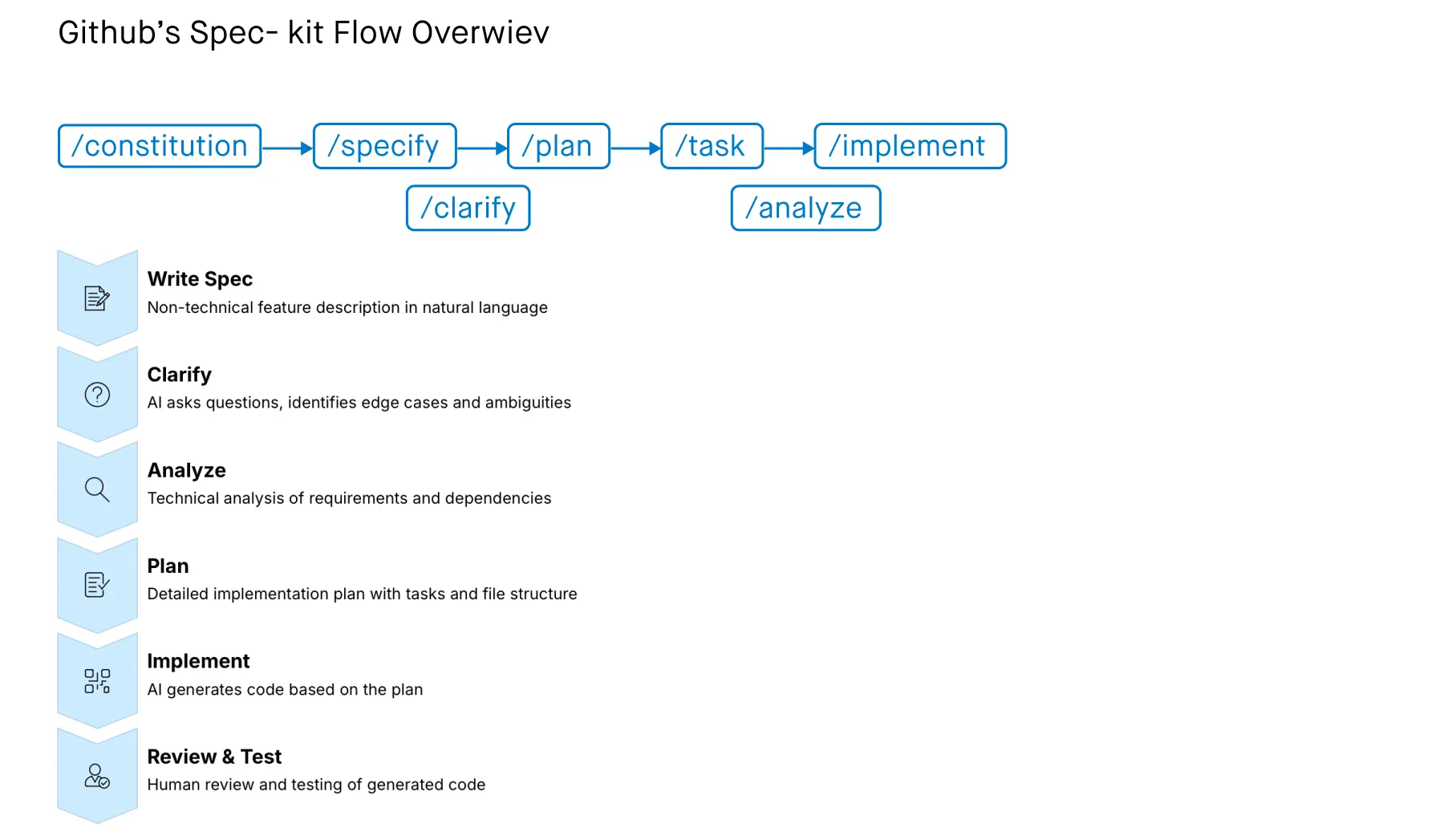
Unlike traditional coding, SDD treats the specification as the primary source of truth. Before a single line of code is written, AI helps clarify requirements, identify edge cases and create a technical execution plan.
For this sprint, we utilized GitHub Spec-Kit. This tool enforces a structured flow: Design → Specification → Implementation. This ensures the AI has full context of the project architecture before it starts generating code.
The Results: 3x Speed at a Fraction of the Cost
We delivered a working MVP on iOS, Android, and Web – complete with a production-ready Docker setup – in record time.
- Speed: The team estimated a 2x to 3x productivity boost.
- Cost: We spent about $30-50 per person/day in tokens. Expensive for a hobby, but a bargain if you’re delivering three times faster.
- Quality: Surprisingly high. The AI included error handling and accessibility by default because the specification demanded it from the start.
Key Learnings
- Seniors are essential: AI is great at typing, but it’s also great at introducing anti-patterns or ignoring your "Constitution" (project rules). You need seniors to act as architects and reviewers, not just "prompt engineers."
- The "Plan" phase is king: If you skim over the plan and go straight to coding, the AI gets confused and starts hallucinating. The plan catches 80% of structural errors before they cost you serious time.
- Evolved QA: Our QA didn't just find bugs; they used AI to compare Figma designs against the app in seconds. The role is shifting from "clicking buttons" to "analyzing logic."
- Design system speedrun: We built the core UI components (inputs, cards, etc.) in 10 minutes plus 2 hours of manual fixing. Normally, that’s a week-long task.
The Pain Points
Nothing is perfect. We noticed several weaknesses that still require human intervention:
- Token guilt: Loading a massive specification into a fresh session can eat 70k tokens before you even say "hello."
- Multi-platform headaches: Coordinating between native iOS and Android while sharing a single spec remains a jigsaw puzzle.
- Scale limits: Specs can’t be "War and Peace." If they get too big, the AI loses the plot. You must break requirements down into small, digestible stories.
The Verdict: Is it worth it?
AI-first development is not magic, but our "guestimated" performance gains show a massive 2-3x speed boost – if you know how to manage it right. It is important to note that while these boosts are our initial estimations from a specific 2-week sprint, they signal a clear shift in productivity.
However, this isn't just about speed. It requires a massive mindset shift: developers must move from being "coders" to "architects." It’s a learning curve and a mindset change. Your tooling (linters, CI/CD, and comprehensive testing) needs to be rock solid to catch the AI's occasional "creative" mistakes. Mastering this Spec-Driven Development (SDD) model is, in our opinion, the key to the future of software engineering.
Building on these insights, we’re now moving all gathered insights from the "lab" to the front lines. This means using AI-driven specs in presales for more accurate estimations and tackling the next big hurdle: applying these workflows to brownfield projects (existing codebases).
.png)

.png)


.png)
.png)
.png)
.png)